
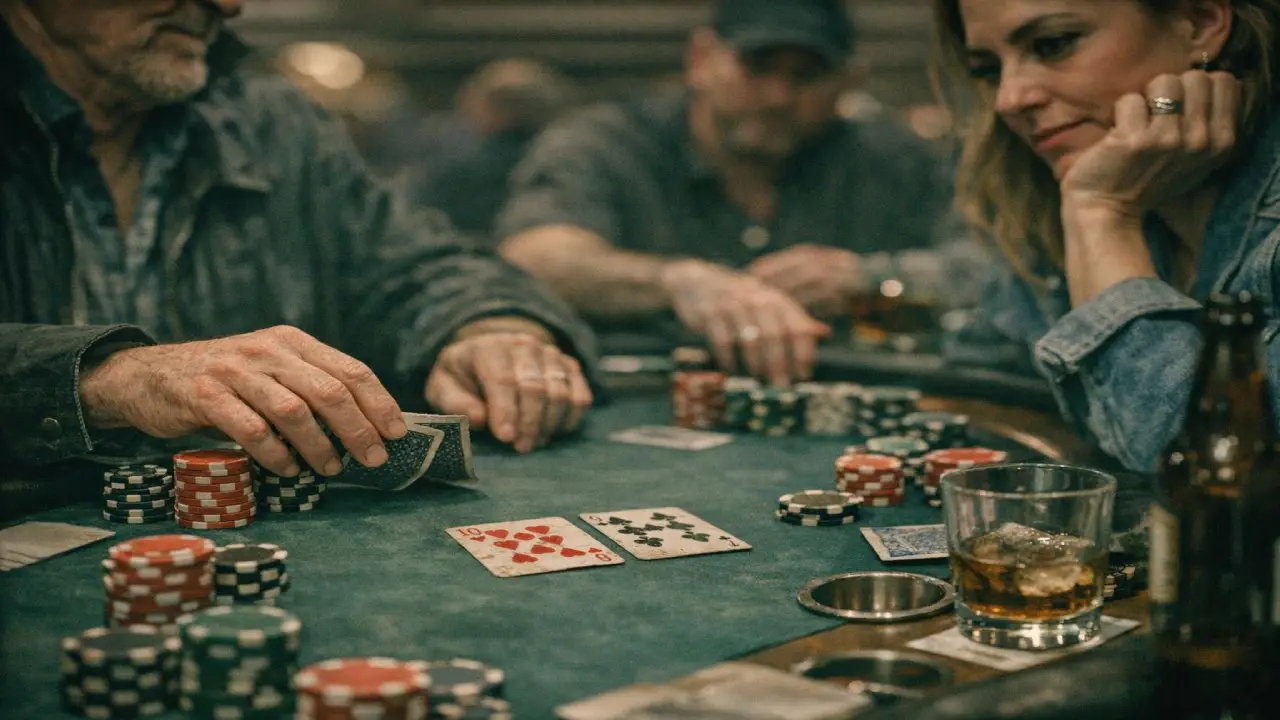
Before a single card is dealt, the ritual has already begun. A player settles into a chair and arranges their chips in a precise stack, tallest on the left, colors grouped, edges aligned. Another taps the felt twice before looking at their hole cards. A third never sits in seat seven. None of these actions change the odds. None of them influence the shuffle. And yet, across every casino floor in the world, players repeat them with a consistency that borders on devotion. The rituals of the card table are one of the most overlooked dimensions of casino culture, a quiet language of gesture, superstition, and belonging that tells us as much about the human need for order as it does about gambling itself.
Why Rituals Exist at the Table
At its core, a ritual is an action repeated in a consistent pattern regardless of whether it produces a measurable result. In everyday life, rituals are everywhere: the way someone always stirs their coffee counterclockwise, the athlete who ties the left shoe first. In a casino setting, the psychological stakes are amplified. Card games involve genuine uncertainty and real financial outcomes, which means the human brain is under constant pressure to find patterns, explanations, and sources of perceived control in an environment where true control is minimal. These micro-routines connect to a much broader theme covered in the quiet rituals of casino play and how atmosphere shapes decision-making.
The illusion of control
Psychologist Ellen Langer coined the term “illusion of control” in 1975 to describe the tendency for people to believe they can influence outcomes governed by chance. A blackjack player who scratches the felt in the same way every time may understand the gesture has no bearing on the next card. But the repetition creates a sense of agency, a feeling that doing something specific makes the outcome less random. That feeling, even if unfounded, reduces anxiety and makes the experience psychologically tolerable.
Stress regulation through predictability
Rituals also serve a regulatory function. When the environment is unpredictable, as every card game inherently is, repeating a familiar action provides a micro-dose of predictability. Neuroscience research on habitual behavior shows that repeating a fixed sequence activates the basal ganglia, a brain region associated with automatic, low-effort processing. This frees up cognitive resources for the actual decision-making required by the game. In a sense, the ritual is not wasted energy. It is a mental anchor that lets the player focus on strategy by outsourcing their anxiety to a familiar routine.
A Taxonomy of Table Rituals
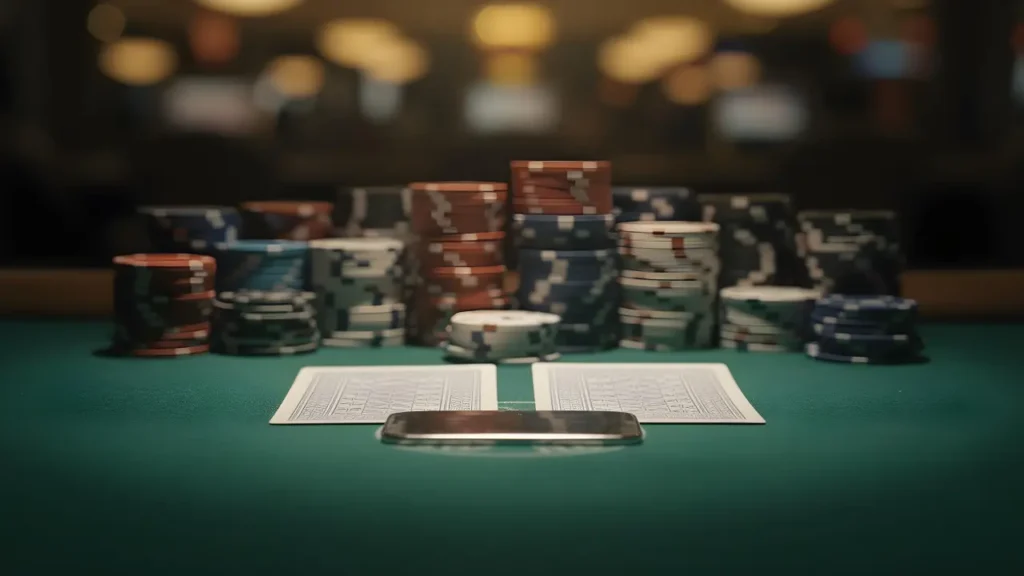
Not all rituals are the same. Observing players across different games and cultures reveals several distinct categories, each serving a slightly different psychological function.
| Ritual Type | Examples | Psychological Function |
|---|---|---|
| Pre-hand routines | Stacking chips, touching a lucky charm, adjusting posture before cards are dealt | Establishing readiness, creating a mental “start line” for each new hand |
| Card-handling habits | Peeking at cards in a specific order, squeezing baccarat cards slowly, bending corners | Prolonging suspense, increasing perceived involvement in the outcome |
| Chip management | Sorting by color, stacking in exact multiples, never mixing denominations | Imposing order on a chaotic environment, maintaining a sense of control over bankroll |
| Superstitious avoidance | Refusing a specific seat, never counting chips mid-session, avoiding eye contact after a loss | Protecting against perceived bad luck, preserving emotional equilibrium |
| Social signals | Tipping the dealer after a win, tapping the table to say “thank you,” verbal catchphrases | Building rapport, reinforcing group identity, expressing gratitude or respect |
What makes this taxonomy useful is that it reveals the multi-layered nature of table rituals. Some are purely internal, aimed at managing the player’s own emotional state. Others are performative, designed to communicate something to fellow players or the dealer. And many operate on both levels simultaneously.
Game-Specific Rituals
Different card games breed different ritual cultures. The pace of the game, the degree of player interaction, and the visibility of information all shape which habits take root. Because every card game has its own pace and dynamic, a quick look at the full list of casino card games helps frame where each ritual takes root.
Baccarat: the art of the squeeze
No game in the casino world is more ritualistic than baccarat. In many Asian and high-limit rooms, the act of revealing the card, known as the squeeze, is elevated to near-ceremony. The player with the largest bet slowly bends and peels the card, building tension for the entire table. Some squeeze from the short edge, others from the long edge. Some blow on the card before turning it. The ritual transforms a binary outcome into a shared theatrical moment. Baccarat tables in Macau, Manila, and Singapore are often the loudest precisely because the squeeze converts passive observation into collective emotional investment.
Blackjack: the scratch, the wave, the tap
Blackjack rituals tend to be more restrained but no less consistent. The required hand signals, scratching for a hit, waving for a stand, are technically rules. But players layer personal variations onto them: tapping the table three times before standing, placing the bet with the chip logo facing a specific direction. Experienced players often describe developing these habits without conscious intention, only noticing them when someone points them out.
Poker: the shield and the tell
Poker occupies a unique position because rituals carry strategic weight. Every habitual gesture can become a “tell” that opponents read for information. This creates a tension: the player wants a ritual for its calming function but must be aware that any predictable behavior is potentially exploitable. High-level poker players often develop deliberately neutral routines designed to give away nothing while still providing internal structure. The card protector, a small object placed on hole cards, is one of the most visible examples: a personalized ritual marker that also prevents the dealer from accidentally mucking the hand.
The Social Fabric of Table Rituals
Beyond individual psychology, rituals serve a powerful social function at the card table. A casino table is one of the few remaining public spaces where strangers sit shoulder to shoulder, share a common activity, and develop a temporary but real sense of community within minutes. The space itself is engineered to encourage this kind of interaction, as detailed in the architecture of attention behind modern casino floor layouts.
How rituals build belonging
- Shared celebration: When the table wins together, particularly in blackjack or craps-adjacent card games, synchronized cheering, fist bumps, and chip clinking create a communal bond that is immediate and visceral. These micro-celebrations are rituals in themselves, repeated with slight variations each time the table hits a streak.
- Dealer rapport: Tipping the dealer, a near-universal practice among regular players, is both a courtesy and a ritual of reciprocity. Many players place the tip bet in the same position every time, using the same phrase. This repetition builds a micro-relationship that enhances the overall atmosphere and often results in a more attentive, engaged dealing style.
- Policing etiquette: Regular players subtly enforce table norms through ritual. A newcomer who touches their cards incorrectly or bets out of turn will often receive a corrective look or a quiet word, not from the dealer, but from another player. These small acts of enforcement preserve the ritual order and signal who belongs to the community and who is still learning its codes.
- Mourning and recovery: After a particularly bad hand, many tables observe a brief, almost imperceptible pause. Players exhale, adjust their chips, take a sip of their drink. This collective reset, though never formally acknowledged, is a group ritual that regulates the emotional temperature and prepares everyone for the next hand.
Rituals in the Digital Age
As card games move into digital and live dealer formats, the question of whether table rituals survive the transition is more relevant than ever. The answer is mixed, but more nuanced than a simple yes or no.
| Ritual Element | Physical Casino | Live Dealer Online | RNG-Based Online |
|---|---|---|---|
| Card squeeze | Performed by player | Performed by dealer on camera, some platforms simulate squeeze interaction | Absent entirely |
| Chip stacking | Fully physical, highly personal | Virtual chip display, no tactile element | Numerical balance only |
| Social gestures | Tapping, nodding, verbal interaction | Chat window, tip button, limited emoji reactions | No social layer |
| Pre-hand routines | Physical movements, lucky charms | Some players develop screen-tapping or clicking habits | Minimal, often replaced by rapid auto-play |
| Collective mood | Palpable, driven by shared physical space | Partially preserved through live chat and visible bet patterns | Absent |
Live dealer platforms preserve more ritual space than purely automated games, which is one reason for their growing popularity among players who value atmosphere alongside action. Some platforms have even introduced interactive squeeze features for baccarat, allowing the player to drag and reveal the card on their screen while the physical card remains face down on the studio table. It is a clever compromise, an acknowledgment that the ritual matters as much as the result.
What digital formats struggle to replicate is the tactile dimension. The weight of a chip, the texture of felt, the peripheral awareness of other bodies at the table are sensory inputs no screen can deliver. Yet players who migrate online often develop new rituals: a particular way of clicking the bet button, a habit of minimizing chat before a big hand, a superstition about which device they use. The impulse to ritualize is not diminished by technology. It simply finds new surfaces to attach to.
Every ritual at the card table, whether it is a centuries-old baccarat squeeze or a freshly invented screen tap, speaks to the same fundamental truth about how people engage with uncertainty. We build small fortresses of habit around us, not because they change the odds, but because they change how we feel about facing them. And in a game where the house always holds the mathematical edge, how you feel may be the only thing that is truly yours to control.
Leave a Reply