
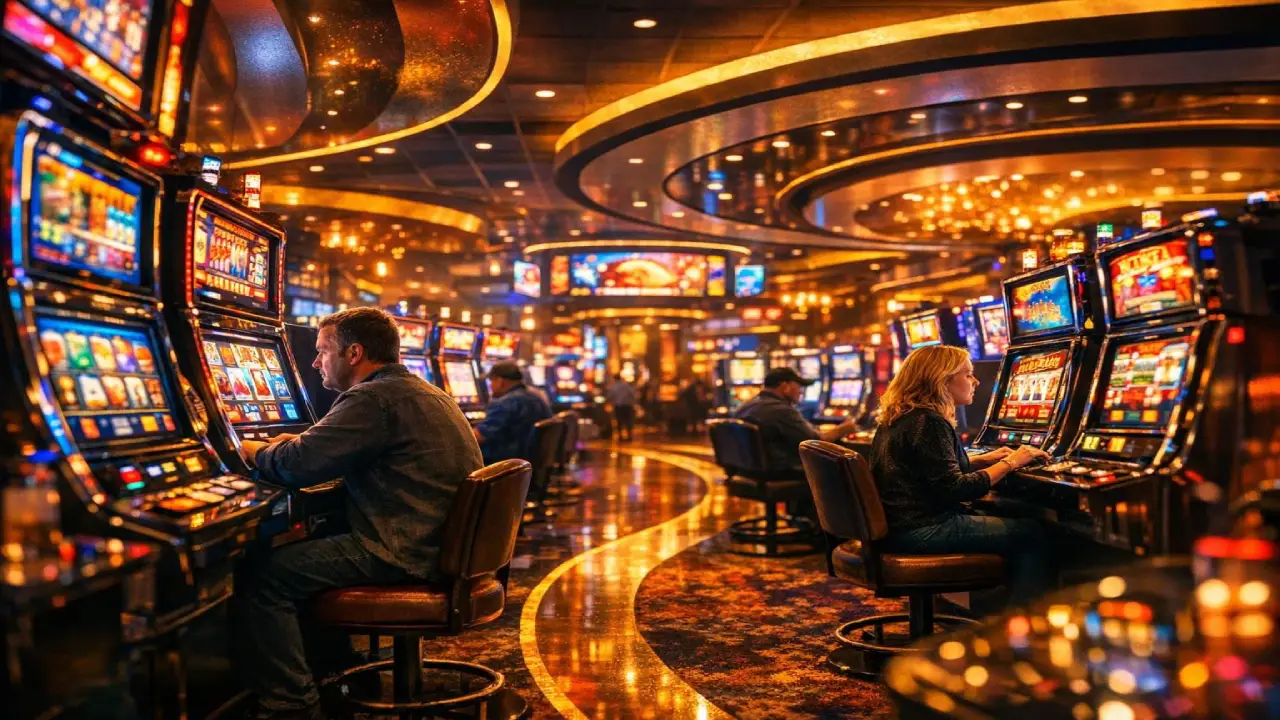
Walk into any major casino and the first thing you will notice is that nothing feels accidental. The carpet pattern pulls your eyes forward. The ceiling height shifts between zones. Slot machines cluster in islands that funnel foot traffic through narrow corridors before opening into wide, inviting plazas around the table games. Every square foot of that floor has been argued over by architects, behavioral consultants, and operations managers whose shared goal is deceptively simple: keep you inside, keep you comfortable, and keep you playing. The modern casino floor is not a room. It is a machine built from space, light, and human psychology.
Two Schools of Thought: Maze vs. Playground
Casino floor design has been shaped by two competing philosophies over the past four decades. Each takes a fundamentally different approach to how space should guide the player, and understanding the contrast reveals how much thought goes into what most visitors experience as a seamless, almost invisible environment.
The maze layout
The older of the two approaches, often associated with casino designer Bill Friedman, treats the floor as a labyrinth. The core idea is disorientation. Low ceilings compress the space and create intimacy. Slot machines are arranged in long, winding rows that obscure sightlines, making it difficult to see exits, restaurants, or the registration desk from the gaming floor. Pathways curve and branch unpredictably, so a player walking toward the restroom inevitably passes dozens of machines they had not planned to encounter.
Friedman codified this approach into a set of principles that dominated casino architecture from the 1970s through the early 2000s. Among the most important were the absence of wide, straight aisles, the use of gaming equipment as the primary visual element rather than grand decor, and the strategic placement of the most popular machines at intersections where foot traffic naturally converges. The logic was straightforward: the harder it is to leave, the longer people stay. And the longer they stay, the more they play.
The playground layout
The rival philosophy, developed by designer Roger Thomas and first implemented at the Bellagio in Las Vegas, inverts nearly every Friedman principle. Thomas argued that casinos should feel like places people want to be, not places they cannot escape. His approach favors high ceilings, natural light where possible, open sightlines, recognizable landmarks within the floor, and a sense of luxury that flatters the visitor rather than trapping them.
The theory behind the playground model is rooted in environmental psychology. When people feel comfortable, relaxed, and in control of their surroundings, they tend to stay longer by choice. They associate the space with positive emotions and return more frequently. Instead of creating anxiety through disorientation, the playground layout creates pleasure through atmosphere. Research conducted after the Bellagio opened showed that the property’s revenue per square foot significantly exceeded industry averages, lending credibility to the idea that beauty and openness could outperform claustrophobia as a retention strategy.
Side-by-side comparison
| Feature | Maze Layout (Friedman) | Playground Layout (Thomas) |
|---|---|---|
| Ceiling height | Low, compressed, intimate | High, open, grand |
| Sightlines | Deliberately blocked by machine rows | Open, with clear landmarks visible across the floor |
| Navigation | Confusing, curved paths that obscure exits | Intuitive, with recognizable zones and logical flow |
| Emotional strategy | Disorientation reduces impulse to leave | Comfort and pleasure increase desire to stay |
| Primary decor | Gaming machines themselves are the visual focus | Art, sculpture, water features, and architectural detail |
| Natural light | Eliminated entirely | Selectively introduced through skylights or atriums |
| Dominant era | 1970s through early 2000s | 2000s to present |
Most modern casinos now operate with a hybrid approach, borrowing elements from both schools depending on the zone. Slot areas may retain some maze-like clustering to maximize machine density, while table game sections and high-limit rooms adopt the openness and elegance of the playground model.
The Psychology of Spatial Cues
Beyond the broad layout philosophy, casino architects deploy a range of specific spatial techniques that operate below conscious awareness. These are the details that most visitors never articulate but always feel.
Absence of clocks and windows
This is perhaps the most widely known design choice, but its effectiveness is worth understanding in depth. Casinos eliminate nearly all references to time and the outside world. Without windows, a player loses the natural cue of shifting daylight. Without visible clocks, the sense of elapsed time becomes unreliable. Studies on temporal perception show that people in windowless environments with constant artificial lighting consistently underestimate how long they have been present, sometimes by as much as 30 to 40 percent. In a space where the goal is to extend session length, that perceptual distortion translates directly into revenue. This connects directly to the quiet rituals of casino play and how atmosphere shapes decision-making across every session.
Strategic placement of essentials
Restrooms, restaurants, cashier desks, and elevators to hotel rooms are almost never located at the perimeter of the gaming floor. They are embedded within it. The walk from a blackjack table to the nearest restroom is designed to take you past slot machines, a roulette wheel, and possibly a promotional display. The return trip follows a different path. This is not laziness in planning. It is precision. Every transition between activities becomes another opportunity for engagement.
Carpet and flooring transitions
Flooring design in casinos is more intentional than it appears. Bold, busy carpet patterns in gaming areas serve a dual purpose. They hide stains and wear from constant foot traffic, but they also create a visual density that keeps the eye moving downward and forward rather than toward the ceiling or the walls. When flooring transitions from carpet to marble or polished stone, it signals a shift in zone, typically toward dining, retail, or a high-limit area. These material changes act as subconscious wayfinding tools, guiding players between experiences without the need for signage that would break the immersive atmosphere.
Zoning: How the Floor Is Divided
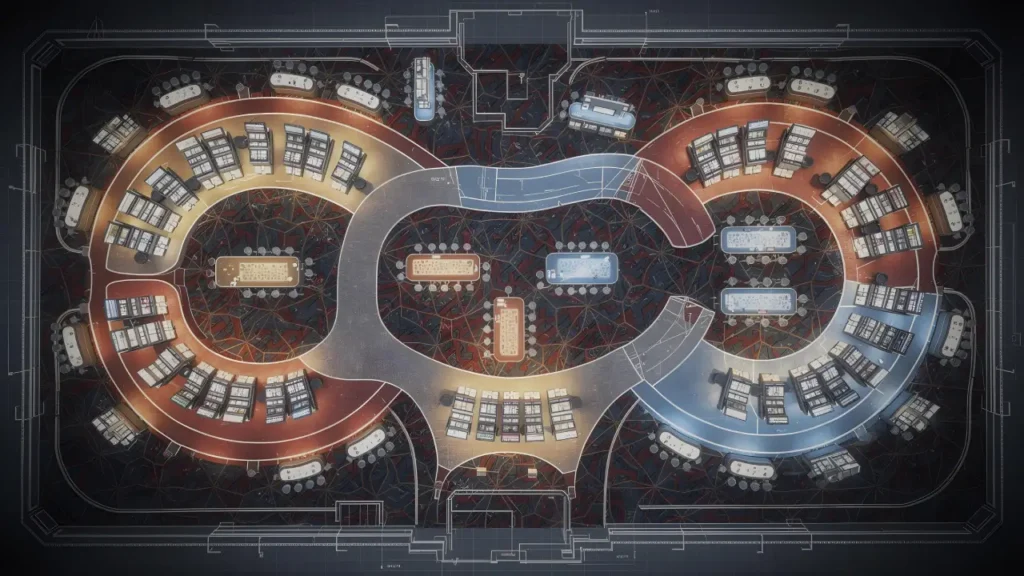
A casino floor is not a single undifferentiated space. It is a collection of carefully defined zones, each designed with its own behavioral objective.
| Zone | Design Characteristics | Behavioral Objective |
|---|---|---|
| Entrance corridor | Bright, high-energy, densely packed with penny slots and video machines | Low barrier to entry, immediate sensory engagement, draw casual visitors in |
| Main slot floor | Medium-height ceilings, clustered machine islands, dynamic LED lighting | Maximize time on device, encourage machine-hopping within the zone |
| Table game plaza | More open layout, slightly warmer lighting, visible from multiple angles | Social atmosphere, longer session times, higher average wager |
| High-limit room | Separated by walls or elevation change, quieter, premium materials, dedicated staff | Exclusivity, comfort, personalized attention that encourages larger play |
| Sportsbook lounge | Stadium-style seating, large screens, bar-adjacent, relaxed dress code | Extended dwell time through entertainment value, cross-selling into other gaming |
Once players settle into a table, a whole separate layer of behavior takes over, explored in the unwritten rituals and habits that define casino card culture. The transitions between these zones are never abrupt. Architects use gradual shifts in ceiling height, lighting color temperature, and sound levels to move players from one environment to the next without creating a jarring break. The goal is a continuous experience that feels natural even though every transition has been engineered.
The Digital Translation: Online Floors Without Floors
As casino culture migrates into the iGaming space, the question of spatial design takes on a new dimension. Online platforms do not have physical corridors or ceiling heights, but they face the same fundamental challenge: how to guide attention, extend engagement, and create an environment that feels worth staying in.
How digital platforms adapt physical design principles
- Visual zoning: Homepage layouts often mirror the casino floor by placing high-energy, low-commitment games (slots, instant wins) prominently at the top, with table games, live dealer sections, and VIP areas accessible through progressive navigation layers.
- Absence of time cues: Many platforms deliberately avoid displaying session clocks unless required by regulation, replicating the windowless casino effect in digital form.
- Pathway design: After a game ends, the interface suggests related games, new promotions, or tournament entries rather than offering a clean exit point, mirroring the physical practice of placing machines between a player and the door.
- Ambient audio: Background soundscapes on some platforms simulate the hum and energy of a live casino floor, creating an atmospheric layer that purely silent browsing cannot match.
Within these engineered environments, players still benefit from clear-headed tactics like the basic strategies that apply across popular casino card games. The translation is imperfect, of course. A screen cannot replicate the full-body immersion of a physical space. But the underlying logic remains the same: shape the environment, and you shape the behavior within it.
Where Design Meets Responsibility
The sophistication of casino floor architecture raises an inevitable question about the boundary between good design and manipulation. There is a meaningful difference between creating a space that people enjoy and engineering one that exploits cognitive vulnerabilities. The industry has become increasingly aware of this tension, particularly as regulators and researchers shine more light on how environmental design intersects with problem gambling.
Some of the most progressive operators have begun incorporating what might be called counter-design elements: visible clocks in strategic locations, clear and direct pathways to exits, responsible gaming kiosks positioned at natural pause points, and lighting schemes that subtly shift over time to restore some sense of temporal progression. These features do not dismantle the core design philosophy. They balance it. The most sustainable casino floor is not the one that traps the most people for the longest time, but the one that creates an experience compelling enough that players choose to return, session after session, with their trust and their budgets intact.
Every carpet pattern, every ceiling contour, and every degree of lighting warmth on a casino floor exists for a reason. Recognizing those reasons does not diminish the experience. If anything, it deepens the appreciation for one of the most elaborate and quietly deliberate built environments in modern commercial architecture.
Leave a Reply